
Research Article
Soft-stem propagation of Piper methysticum in peat-based cubes and an aeroponic cloner: a greenhouse proof-of-concept study
- 1 American Kava Association; Root of Happiness Kava, Rancho Cordova, California, USA
- 2 American Kava Association; Nakava LLC, Boca Raton, Florida, USA
- 3 Kavafied, Tampa, Florida, USA
Correspondence: Tyler Blythe, admin@americankavaassociation.org · ORCID: Tyler Blythe 0009-0006-7884-0650; Jeffrey Bowman 0009-0004-1269-6559
- DOI
- Pending Crossref registration
- Preprint
- 10.5281/zenodo.23741149 · AKA Technical White Paper No. 1
- Received
- 28 October 2026
- Accepted
- 28 October 2026
- Published
- 28 October 2026
- Volume
- Volume 1 (2026)
- Article
- 001
- Article type
- Research Article
- Review
- Computational Manuscript Review (CMR) · Editorially accepted
- Handling editor
- Tyler Blythe, Editor-in-Chief (also an author)
- License
- CC BY 4.0 · © 2026 The Author(s)
Abstract
Kava (Piper methysticum) is vegetatively propagated, and soft-stem material collected during pruning could provide an additional source of nursery plants. We evaluated rooting and short-term establishment of soft-stem cuttings from Kali-ISA and Kali-Hiwa in two greenhouse runs approximately 12 weeks apart. Each run used one 50-cube peat tray containing 25 cuttings per cultivar and one T48 aeroponic cloner containing 18 cuttings per cultivar. Cuttings from multiple matched stock plants were randomized to the systems and received rooting gel, nutrients, and a commercial bacterial inoculant. Visible roots were present on 22/50 (44.0%) and 24/50 (48.0%) peat-cube cuttings at day 21 in the first and second runs, respectively, and on 19/36 (52.8%) and 18/36 (50.0%) aeroponic cuttings at day 14. All 83 root-positive cuttings were transplanted into 4-inch nursery pots and survived 30 d after transplant. These observations demonstrate that selected soft-stem material can produce rooted, established nursery plants under the tested protocols. Because cuttings shared one propagation unit per system per run, assessment times differed, and there was no concurrent woody-cutting control, the results are descriptive and do not establish relative rooting speed, system equivalence, or superiority over conventional propagation. Independent propagation-unit replication and longer follow-up are needed to evaluate nursery-scale performance.
Keywords: Piper methysticum; vegetative propagation; soft-stem cuttings; aeroponics; peat-based rooting cubes; nursery establishment
1. Introduction
Kava (Piper methysticum) is a clonally propagated crop with longstanding cultural and economic importance in the Pacific Islands [1,2]. Its cultivation depends on vegetative planting material, making the production and handling of propagules important components of nursery management [3]. Growers developing nursery stocks may benefit from additional ways to use material available during routine plant maintenance, provided that those methods produce plants capable of establishment.
Conventional kava propagation commonly uses nodal pieces from mature stems [3]. Davis and Brown examined emergence from soil using nodes from different positions on mature stems, illustrating the relevance of planting-material age and propagation conditions [3]. Their emergence endpoint is distinct from the presence of visible roots on an exposed or substrate-grown cutting. Historical results therefore provide context for protocol development but are not a directly interchangeable benchmark for the rooting observations reported here.
Tissue-culture protocols provide another route to kava multiplication [4,5]. Zhang et al. reported in vitro rooting and subsequent transfer of regenerated plantlets into vermiculite and sand for establishment [4], while Prasad et al. examined regeneration from meristem material [5]. These approaches and conventional stem propagation address different nursery requirements. The present study did not compare their costs, multiplication rates, or establishment success with those of soft-stem cuttings.
Our objective was to document whether selected soft-stem kava cuttings could form roots in two practical greenhouse propagation systems: peat-based rooting cubes and an aeroponic cloner. We interpret the observations as a proof of concept for the use of this planting material under the specified protocols, rather than as a test of superiority over traditional propagation or tissue culture.
1.1. Rationale for evaluating soft-stem material
Practical guidance in the Vanuatu National Kava Strategy 2016–2025 recommends woody mid-stem material and cautions against soft upper stems because of their susceptibility to rot and poor root and shoot development [6]. That advice is relevant to planting-material selection, but it does not establish how selected soft-stem cuttings will perform in the greenhouse systems examined here. We therefore evaluated rooting directly under defined handling, rooting-agent, and environmental conditions without assuming that the results would transfer to other nursery settings.
Aeroponic and soilless propagation have been investigated in other crops, including Cannabis sativa [7]. Such work provides a methodological context for testing these systems in kava. The present study documents the nursery application of two protocols using selected soft-stem material from two named kava cultivars, with observations from two temporally separated propagation runs.
2. Materials and Methods
2.1. Plant Material and Sources
Soft-stem cuttings were selected as herbaceous, pliable stem segments with little apparent lignification that bent approximately 90° without snapping. The material was non-senescing, green, and turgid, measured 0.5–1.0 cm in diameter, and was taken from the mid-canopy within the first three nodes below the apical meristem. Kali-ISA and Kali-Hiwa stock plants were grown at the Kali Kava Research Facility in Sacramento, California, USA. The stock originated in Hawai‘i and was identified by the authors, who have expertise in kava, and by the supplying grower, who had approximately 30 years of kava-farming experience. Identification was based on provenance and cultivar morphology, supported by repeated prior high-performance thin-layer chromatography (HPTLC) testing consistent with kava identity and high-performance liquid chromatography (HPLC) profiles consistent with the expected cultivar chemotypes. Voucher specimens are retained at the American Kava Association research greenhouse. For the first run, cuttings were collected in early August 2025 at approximately 7:00 p.m. from Kali-ISA and Kali-Hiwa stock approximately four and three years old, respectively. Material for the second run was collected from the same greenhouse stock in early November 2025. Multiple mother plants contributed cuttings of each cultivar in each run; within cultivar, mother plants were matched for age, size, health, and growing conditions.
2.2. Cutting Preparation
Cuttings were excised with a sterilized scalpel at approximately 45°, about 1 cm below the basal node, and trimmed approximately 1 cm above the upper node. Each cutting measured 7–12 cm in length and contained two nodes. Leaf blades were removed at the lamina–petiole junction, leaving the petioles attached. The basal 2 cm of each cutting was immersed for 1 min in Clonex® Rooting Gel, reported to contain 0.31% indole-3-butyric acid, and was then inserted into its propagation system without an intervening drying period.
In each run, mother plants were selected at random from healthy greenhouse stock maintained under similar growing and light conditions, and cuttings were randomized to the two propagation systems. One peat tray contained 50 cuttings, comprising 25 of each cultivar, and one T48 aeroponic cloner contained 36 cuttings, comprising 18 of each cultivar. Thus, each run contained 86 cuttings and one propagation unit per system. Both cultivars shared the tray and both shared the cloner within a run. The same allocation was used in the second run, giving 172 cuttings across the study. Individual cuttings were subsamples within their propagation unit, not independently replicated system treatments.
2.3. Propagation Media and Equipment
Peat-based propagation used Root Riot® cubes, with one cutting per cube in one 50-cell propagation tray per run, covered by a 7.5-inch humidity dome. Cubes were initially soaked in the prepared solution described in Section 2.4. No additional watering was required during the 21-d rooting period; the cubes remained moist beneath the dome. The commercial substrate was used as supplied; its physical properties and nutrient content were not independently measured.
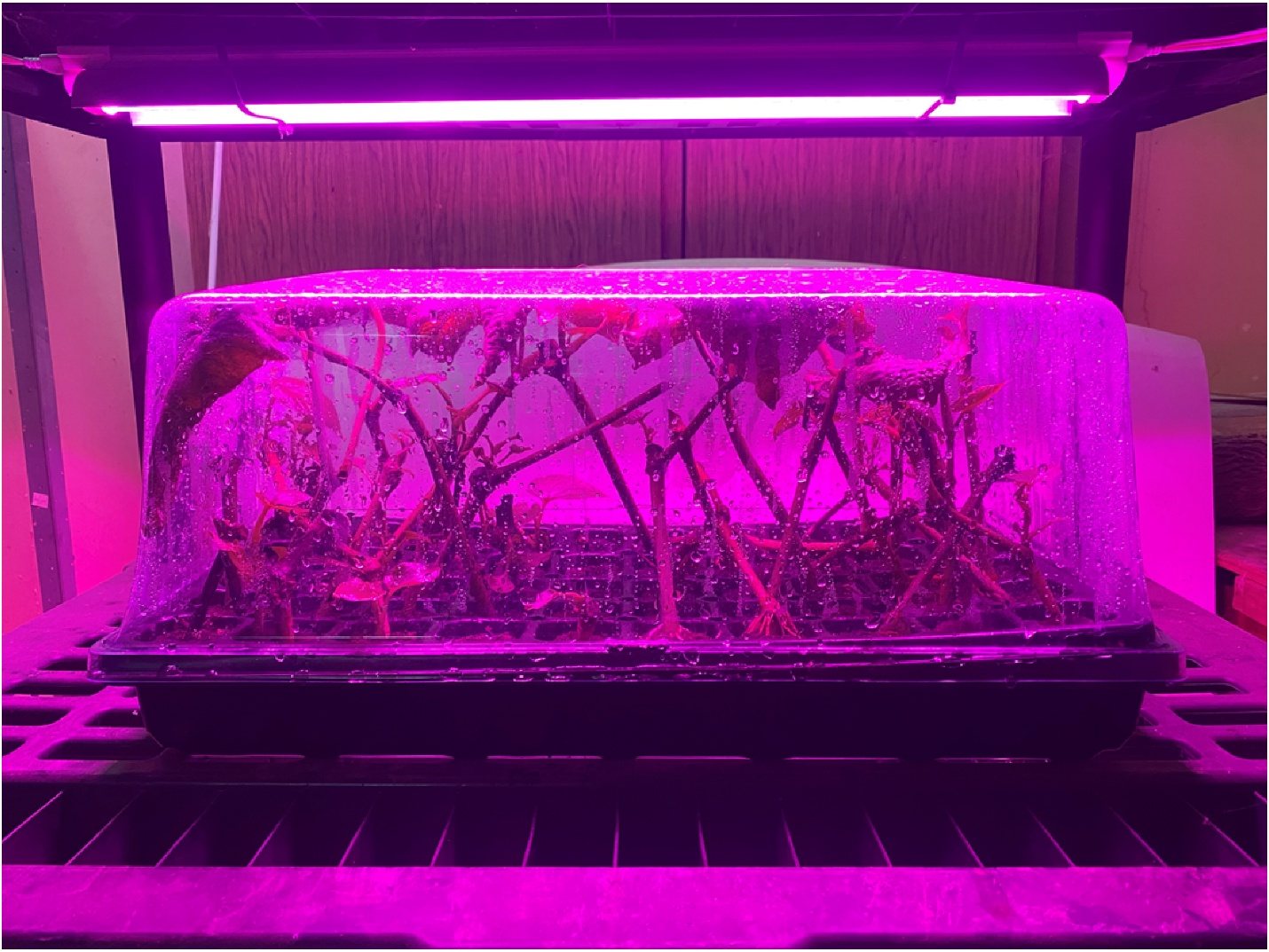
Aeroponic propagation used one TurboKlone® T48 unit per run, with 48 neoprene collar positions above a shared reservoir filled with 4 gallons of prepared solution; 36 positions were occupied by study cuttings. The spray system operated continuously. Before use, collar surfaces were swabbed with 70% ethanol and rinsed with sterile reverse-osmosis water, then soaked for 15 min in commercial bleach diluted one part bleach to nine parts water and rinsed three times with sterile reverse-osmosis water. Equipment was also cleaned between runs using the same bleach-to-water dilution. Equipment sanitation was part of the protocol; microbial contamination and sanitation efficacy were not measured outcomes.
2.4. Rooting Agents and Nutrient Solutions
Both systems received HydroGuard® (Botanicare®), a commercial Bacillus amyloliquefaciens inoculant, and Kind Grow nutrient solution (Botanicare®; N–P–K 2–2–4), each at 2 mL per gallon of prepared solution. The manufacturer's minimum viable count of 1.0 × 10⁴ CFU/mL [8] refers to the HydroGuard product before dilution, not to a measured concentration in the propagation solution. Reservoir pH, total dissolved solids (TDS), and electrical conductivity (EC) were checked daily using a calibrated combination meter. The solution was managed toward maintained targets of pH 6.2, TDS 152 ppm, and EC 319 µS/cm; these values are management targets rather than calculated means of the daily readings. The solution was not replaced during the 14-d aeroponic or 21-d peat-cube propagation interval. Rooting gel, inoculant, and nutrients were components of the combined protocols; their individual effects were not tested.
2.5. Environmental Conditions
Air and reservoir temperatures were monitored. Air temperatures under the humidity domes ranged from 23 to 30 °C, and aeroponic reservoir temperature was reported as 18 ± 1 °C. The aeroponic unit incorporated its circulation fan; no additional cooling or deliberate dome ventilation was used. Lighting was provided by 18-W red/blue LED fixtures, described as a 50:50 red/blue spectrum, positioned approximately 15 cm above the domes and operated for 18 h daily, from 06:00 to 24:00. Photosynthetic photon flux density was estimated from equipment information at approximately 200 µmol m⁻² s⁻¹, rather than measured at the cutting canopy. Peat-cube trays were maintained under the same stated air-temperature and lighting regime and covered by 7.5-inch humidity domes. Equivalence of the root-zone environments was not established.
2.6. Rooting assessment
Cuttings were assessed at 21 d in peat cubes and 14 d in the aeroponic system. The primary outcome for this descriptive analysis was the presence of any visible roots at the system-specific assessment. Original records classified cuttings as Rotted, Alive, No Roots, Poorly Rooted, or Well-Rooted. Every cutting with visible roots was included in one of the latter two classes, which were combined as Rooted for the present analysis. Rotted denoted complete tissue decay and necrosis; Alive, No Roots denoted green, turgid stems without visible roots. These three analysis categories are mutually exclusive and account for all installed cuttings. The original root-positive grading counts are retained in Supplementary Data S1 but are not analyzed as validated measures of root-system quality. Basal stem diameter was measured using digital calipers with stated precision of ±0.1 mm.
2.7. Transfer to nursery media
All 83 cuttings with visible roots, including both original rooted classes, were transplanted into 4-inch nursery pots containing FoxFarm Ocean potting mix amended with an additional 10% perlite by volume and Azomite at the product-label application rate. Transplants were moved to the greenhouse housing the mother plants, maintained under the same controlled growing conditions as the mother stock, and followed for 30 d after transfer. Survival and continued vegetative growth were observed; all transplanted cuttings were accounted for throughout this follow-up. Survival was calculated among transplanted, root-positive cuttings, whereas established-plant yield was calculated relative to all initially installed cuttings.
2.8. Second propagation run
A second run was conducted approximately 12 weeks after the first using the same greenhouse stock, cutting-selection criteria, allocation, rooting-agent treatment, and stated propagation conditions. One peat tray and one aeroponic cloner were used again, with the same system-specific assessment times and outcome classes. The two runs represent temporally separated applications of the protocols at one site, not independent-site validation or a controlled test of season.
2.9. Descriptive analysis and scope of inference
Outcomes are presented separately by run, cultivar, and propagation system as counts and percentages of installed cuttings. Root-positive counts combine the two originally recorded rooted classes. All category totals were checked against the installed counts. Each run contained one shared tray and one shared cloner, giving two temporally separated unit-level observations per system and no within-run replication of propagation units. Cutting counts are therefore not used as independent system-treatment replicates. Pooled fractions summarize production across the observed runs rather than estimating population-level success probabilities.
The analysis is descriptive. No hypothesis tests, equivalence tests, post-hoc power estimates, or cutting-level confidence intervals are used. The purpose is to document root formation and short-term nursery establishment under each protocol. Different assessment times and the absence of a concurrent woody-cutting control prevent estimation of comparative rooting speed or relative performance against conventional propagation. Observed differences are not interpreted as cultivar or system effects.
3. Results
3.1. Rooting in the two propagation runs
Both cultivars formed roots under both protocols in the first run (Table 1). At day 21, 12/25 Kali-ISA cuttings (48.0%) and 10/25 Kali-Hiwa cuttings (40.0%) in peat cubes had visible roots, giving 22/50 (44.0%) for the tray. At day 14, the aeroponic counts were 10/18 (55.6%) and 9/18 (50.0%), respectively, giving 19/36 (52.8%) for the cloner. These fractions describe the outcomes at different system-specific assessment times, not a common-time comparison.
| Category | Peat Cubes (Kali-ISA, n = 25) | Peat Cubes (Kali-Hiwa, n = 25) | Aeroponics (Kali-ISA, n = 18) | Aeroponics (Kali-Hiwa, n = 18) |
|---|---|---|---|---|
| Rotted | 9 (36.0) | 10 (40.0) | 5 (27.8) | 6 (33.3) |
| Alive, no roots | 4 (16.0) | 5 (20.0) | 3 (16.7) | 3 (16.7) |
| Rooted | 12 (48.0) | 10 (40.0) | 10 (55.6) | 9 (50.0) |
| Installed total | 25 | 25 | 18 | 18 |
In the second run (Table 2), 13/25 Kali-ISA cuttings (52.0%) and 11/25 Kali-Hiwa cuttings (44.0%) rooted in peat cubes by day 21, giving 24/50 (48.0%) for the tray. At day 14, 9/18 cuttings (50.0%) of each cultivar rooted in the aeroponic cloner, giving 18/36 (50.0%). Across both runs, 46/100 peat-cube cuttings (46.0%) and 37/72 aeroponic cuttings (51.4%) were root-positive, totaling 83/172 (48.3%). The remaining cuttings comprised 60 recorded as rotted and 29 alive without visible roots at assessment. These pooled counts summarize the observed material only.
| Category | Peat Cubes (Kali-ISA, n = 25) | Peat Cubes (Kali-Hiwa, n = 25) | Aeroponics (Kali-ISA, n = 18) | Aeroponics (Kali-Hiwa, n = 18) |
|---|---|---|---|---|
| Rotted | 8 (32.0) | 10 (40.0) | 6 (33.3) | 6 (33.3) |
| Alive, no roots | 4 (16.0) | 4 (16.0) | 3 (16.7) | 3 (16.7) |
| Rooted | 13 (52.0) | 11 (44.0) | 9 (50.0) | 9 (50.0) |
| Installed total | 25 | 25 | 18 | 18 |
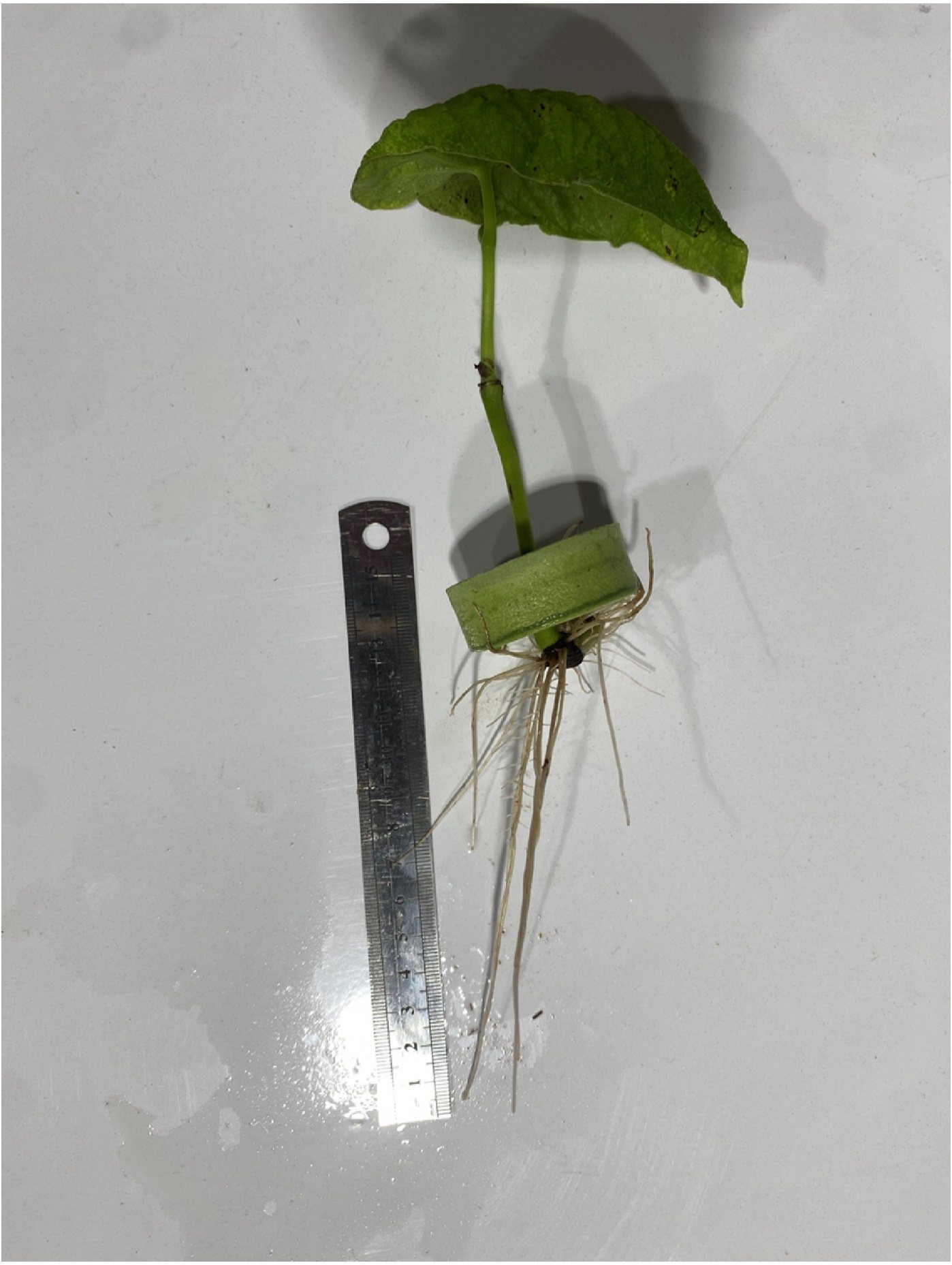
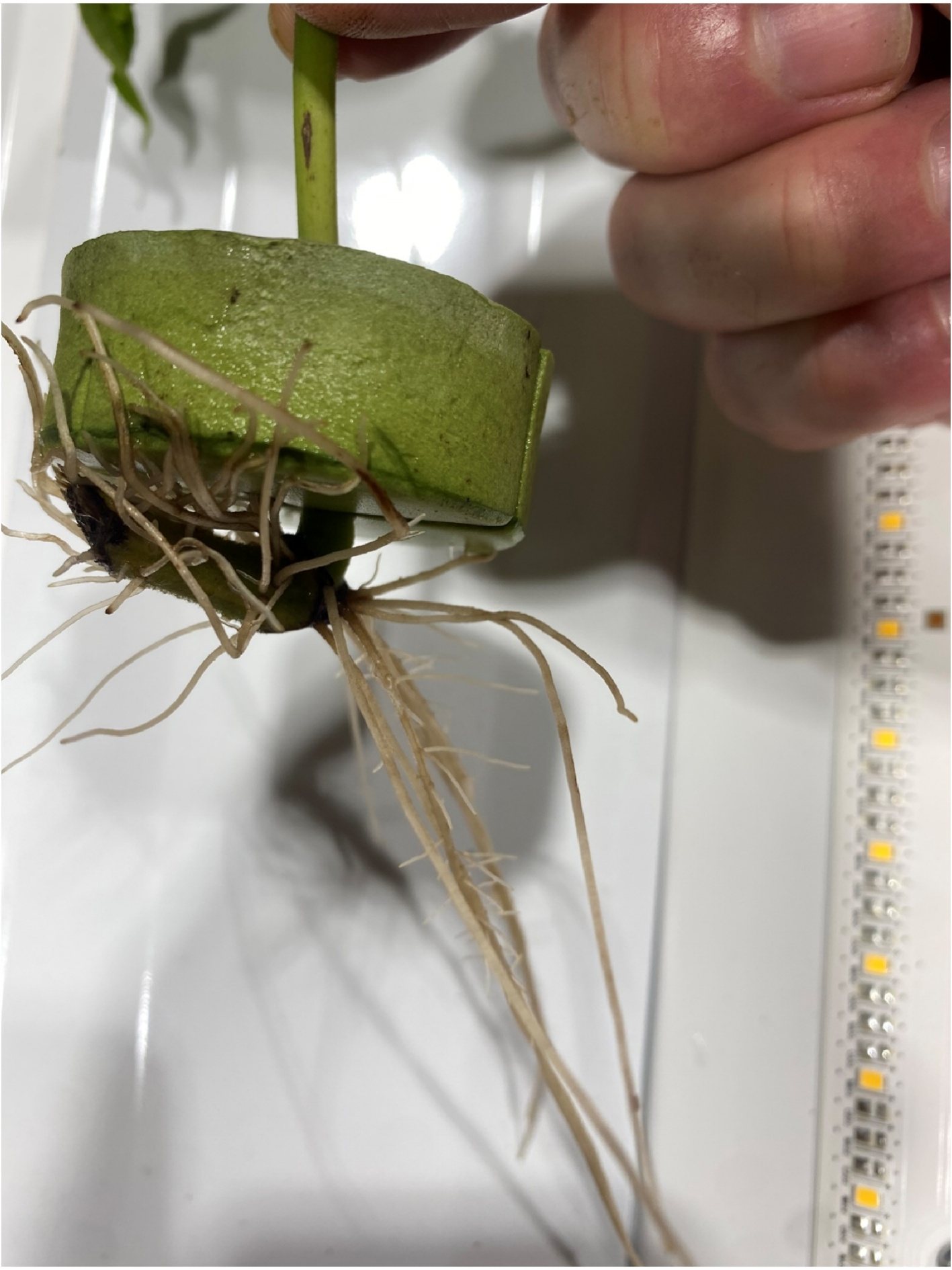
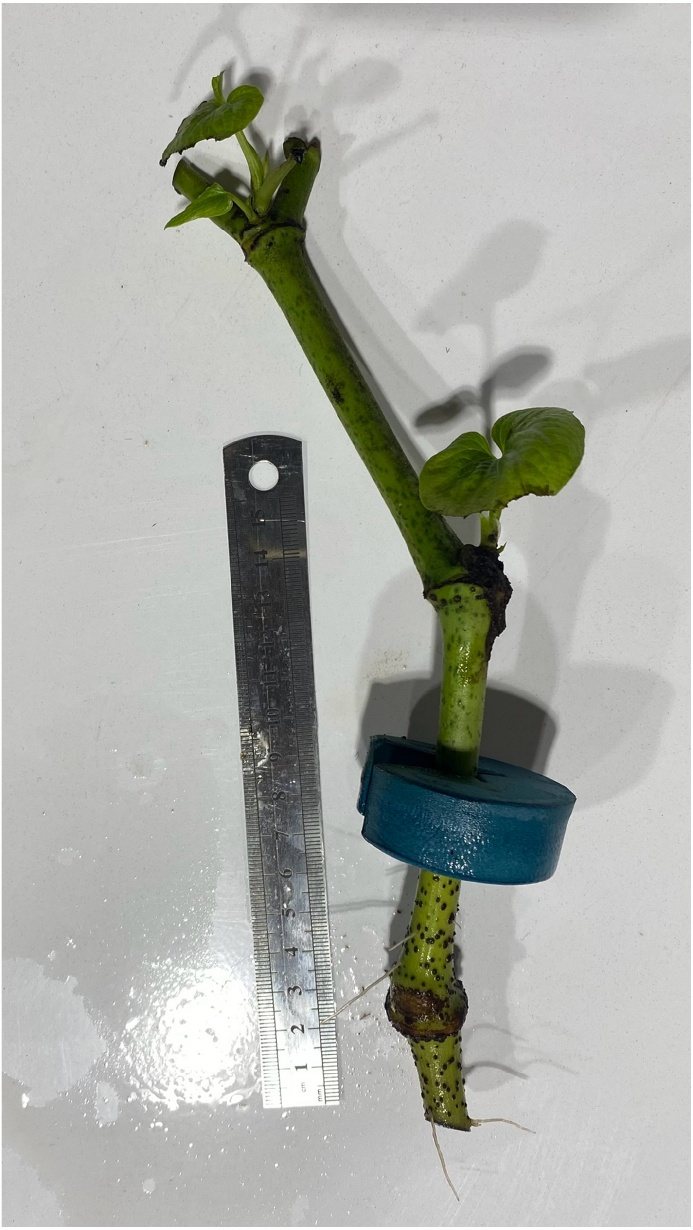
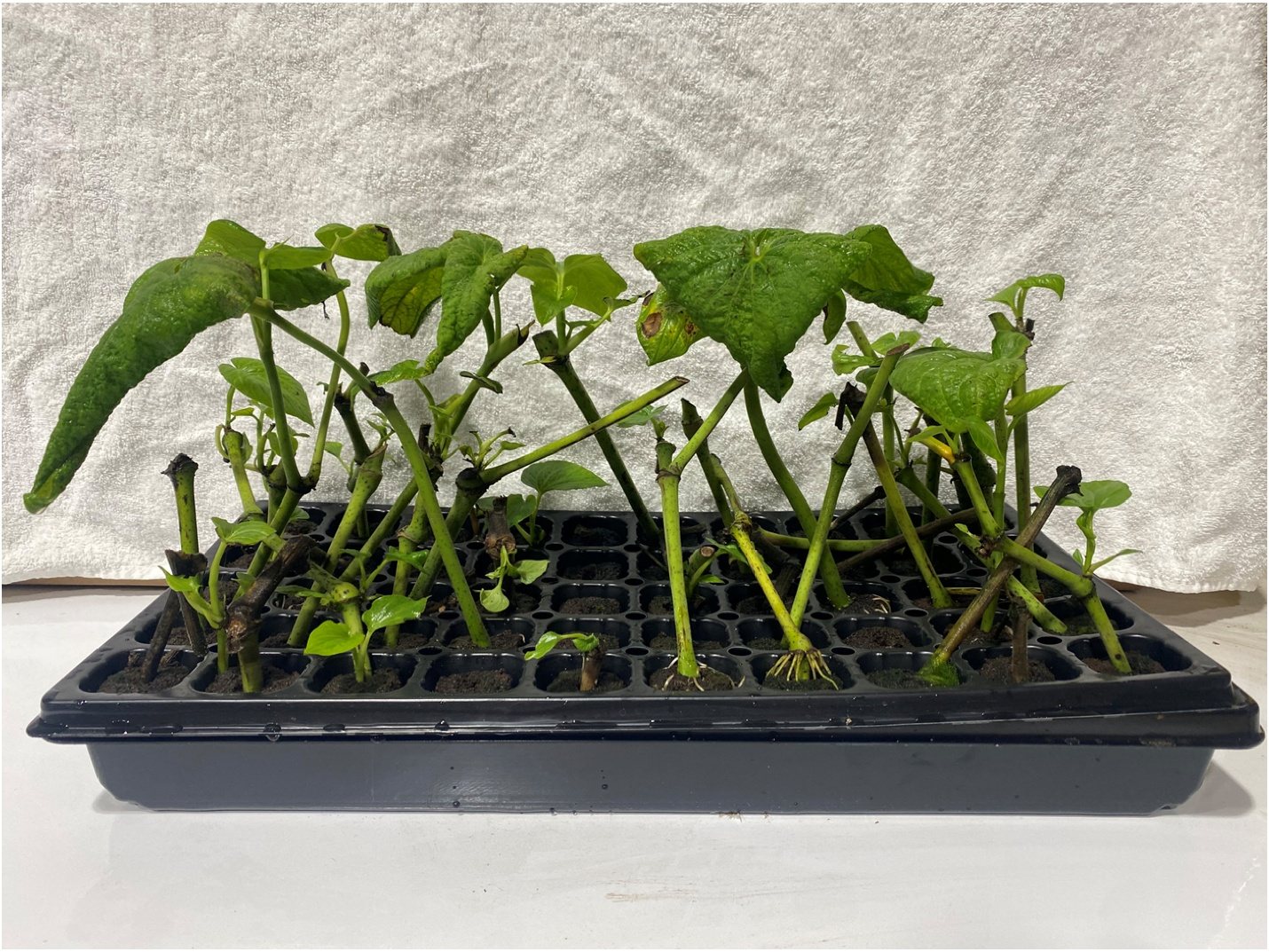
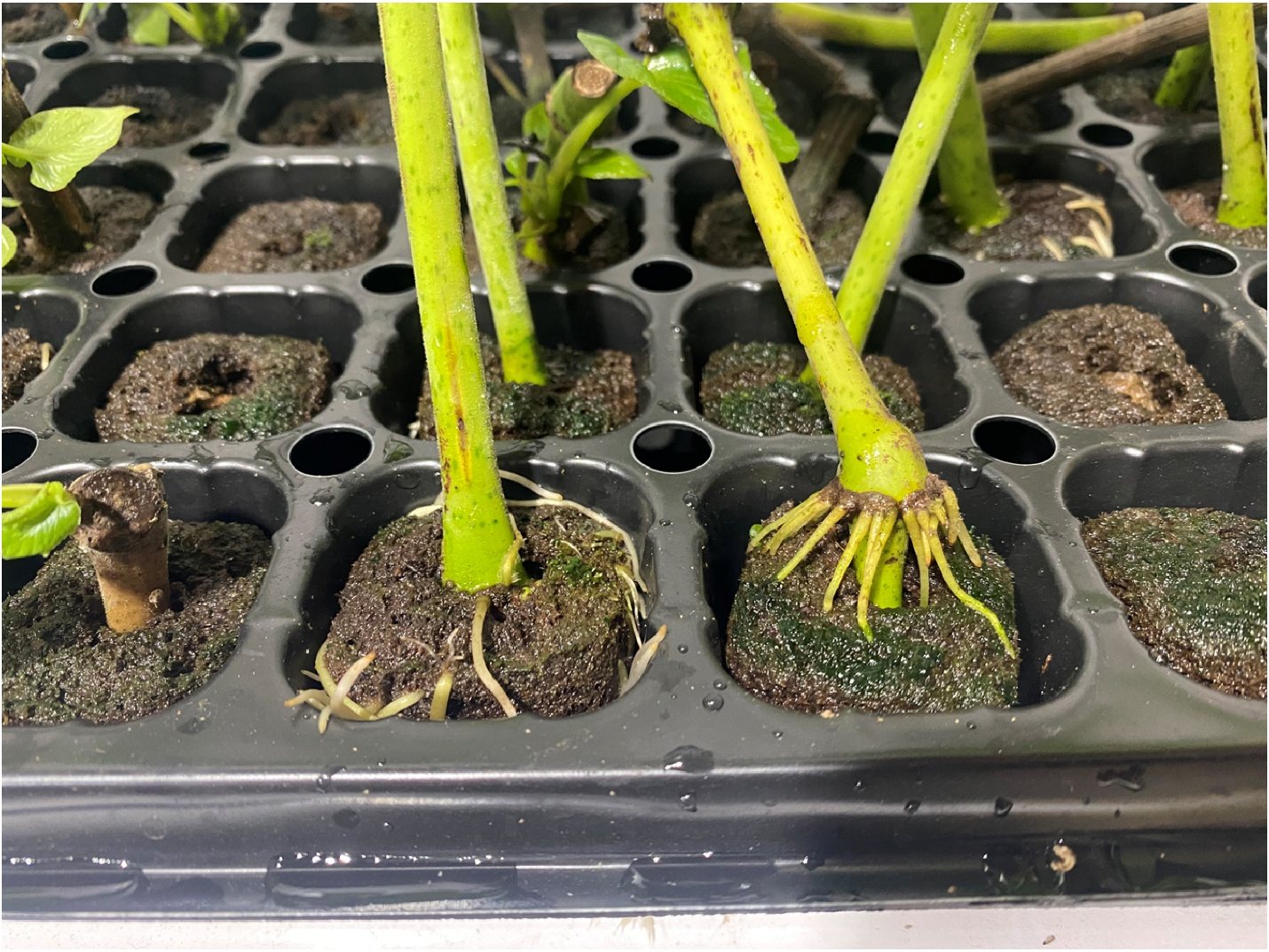
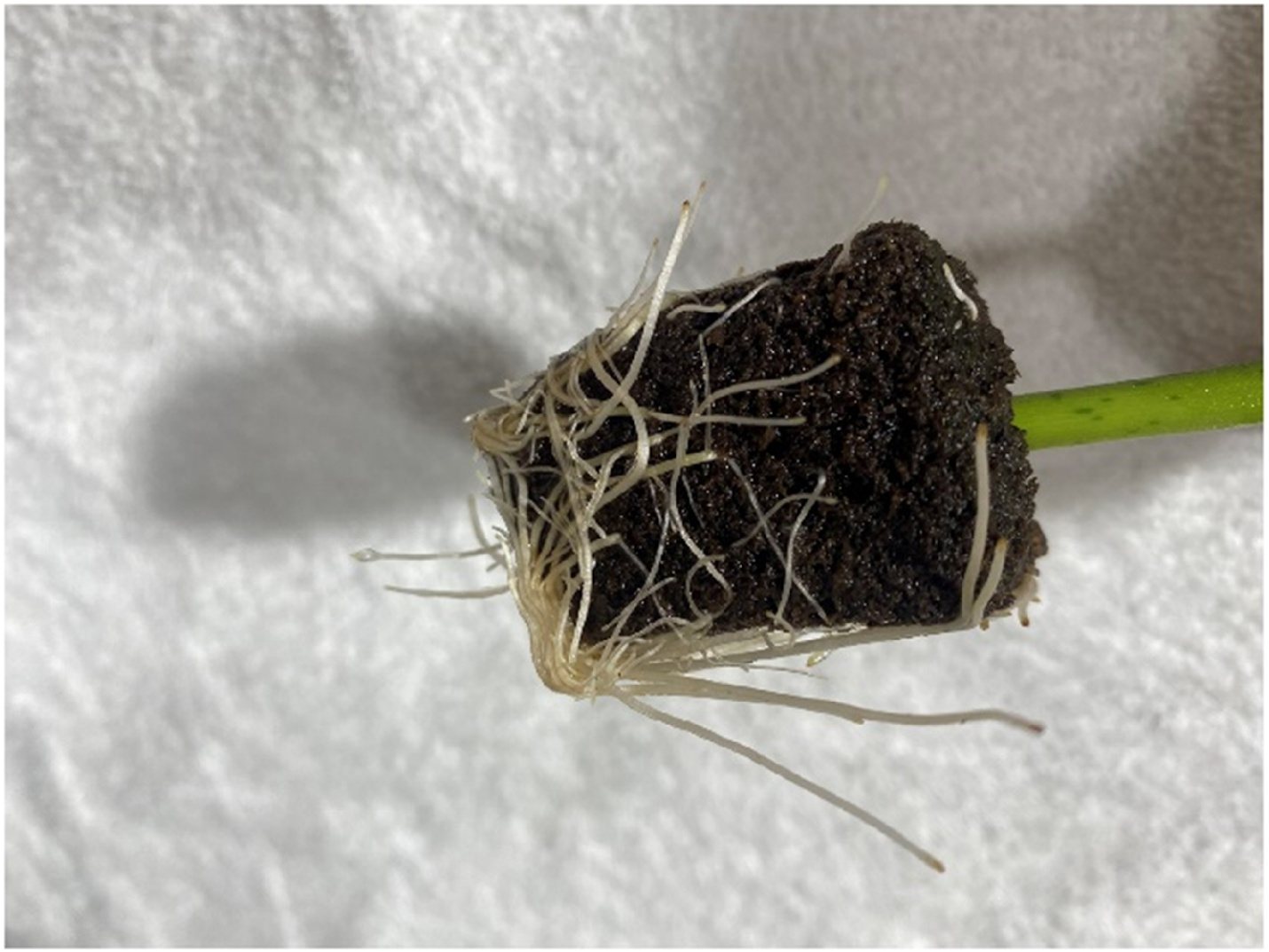
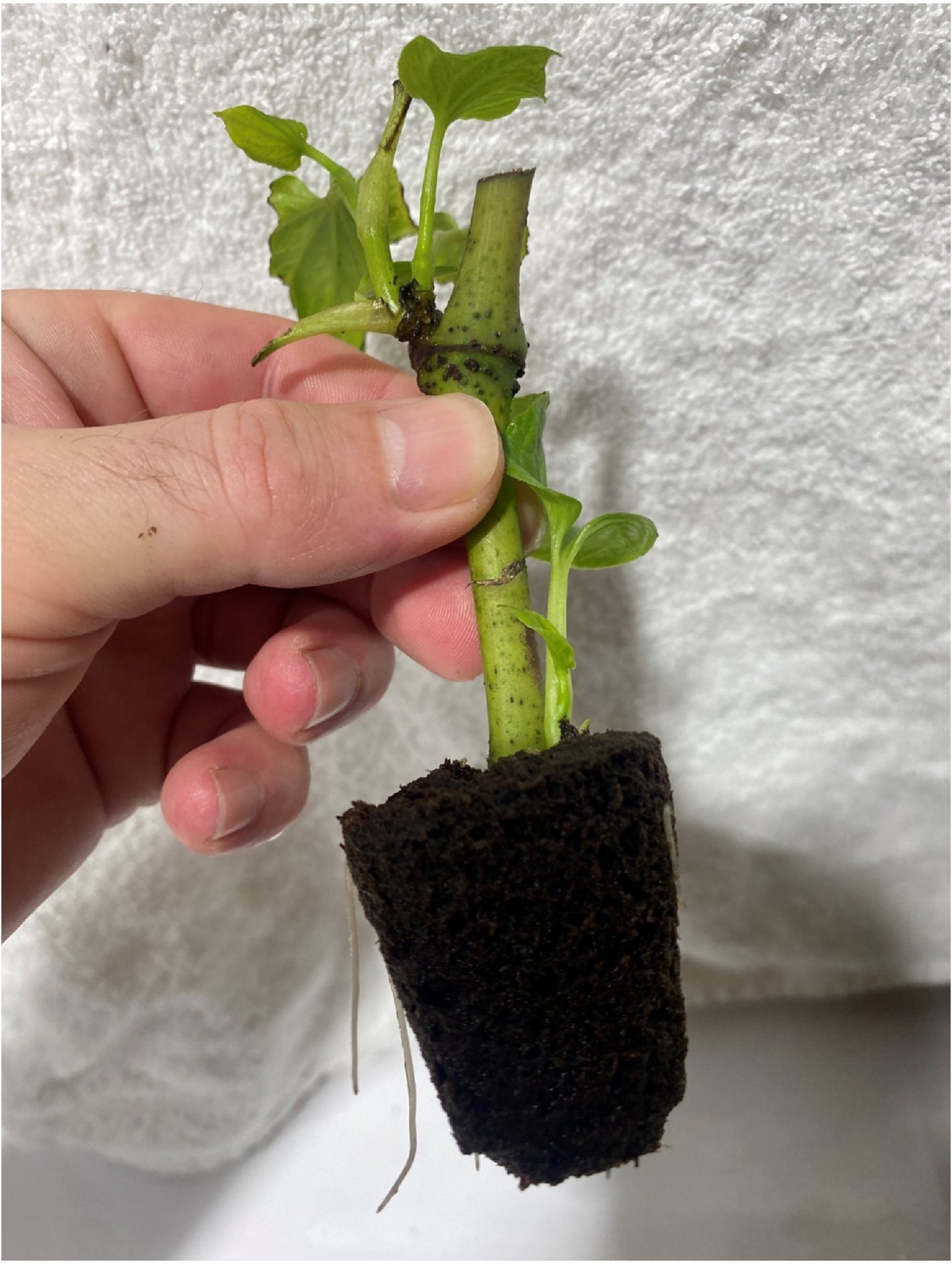
Representative photographs show root development in aeroponic cuttings (Figures 1–3) and peat-cube cuttings (Figures 4–7). They illustrate the types of material and root development observed; they are not random samples or quantitative comparisons of root-system size.
3.2. Short-term nursery establishment
All 83 root-positive cuttings were transplanted, and all survived the complete 30-d follow-up, giving 83/83 (100%) survival among transplants. This included all 46 rooted cuttings from peat cubes and all 37 from aeroponics. Continued vegetative growth was observed. Relative to the 172 initially installed cuttings, the observed yield of rooted plants surviving this follow-up was 83/172 (48.3%). This production fraction differs from conditional transplant survival and does not describe the eventual fate of cuttings that were still unrooted at assessment.
4. Discussion
The principal finding is that selected soft-stem material from Kali-ISA and Kali-Hiwa produced rooted nursery plants under both greenhouse protocols in two runs approximately 12 weeks apart. Of 172 installed cuttings, 83 formed visible roots at the respective assessments, and all 83 survived 30 d after transfer to nursery pots. The contribution is a documented application of these protocols to pruning-derived soft-stem material, with a complete accounting of initial rooting outcomes and short-term survival of the root-positive cohort.
The two systems were assessed at different endpoints. Finding roots at day 14 in aeroponics and day 21 in peat cubes does not establish that aeroponics accelerated rooting by seven days: the timing of root initiation in peat cubes before day 21 was not quantified in the reported observations. The different exposure periods also limit interpretation of rotting counts. A common observation schedule is required before either rooting speed or loss rates can be compared directly.
Comparison with conventional propagation must likewise remain contextual. Davis and Brown evaluated emergence from soil using mature nodal planting material [3], whereas the present study classified visible roots on selected soft-stem cuttings. Differences in material, environment, endpoint, and observation period prevent those historical results from serving as a concurrent control. The present work therefore does not establish equivalence to, superiority over, or a shorter production cycle than traditional nodal propagation.
The results do not invalidate practical cautions about using soft upper stems in conventional propagation settings [6]. Instead, they show that rooting can occur in selected soft-stem material under the protocols used here. Rotting was still observed in both systems. Without pathogen assays or an experimental manipulation of sanitation, the causes of tissue loss and any effect of the sanitation procedure cannot be determined.
Rooting gel, substrate or spray conditions, nutrient supply, and inoculant application were combined within each protocol. None was isolated experimentally. Studies of aeroponic propagation in cannabis and kratom [7,9] and of water–air relations in propagation substrates [10] identify variables worth examining, but do not establish the mechanism responsible for the present kava observations. Endogenous hormone concentrations, root-zone oxygen, and microbial populations were not measured; physiological or microbial explanations remain hypotheses.
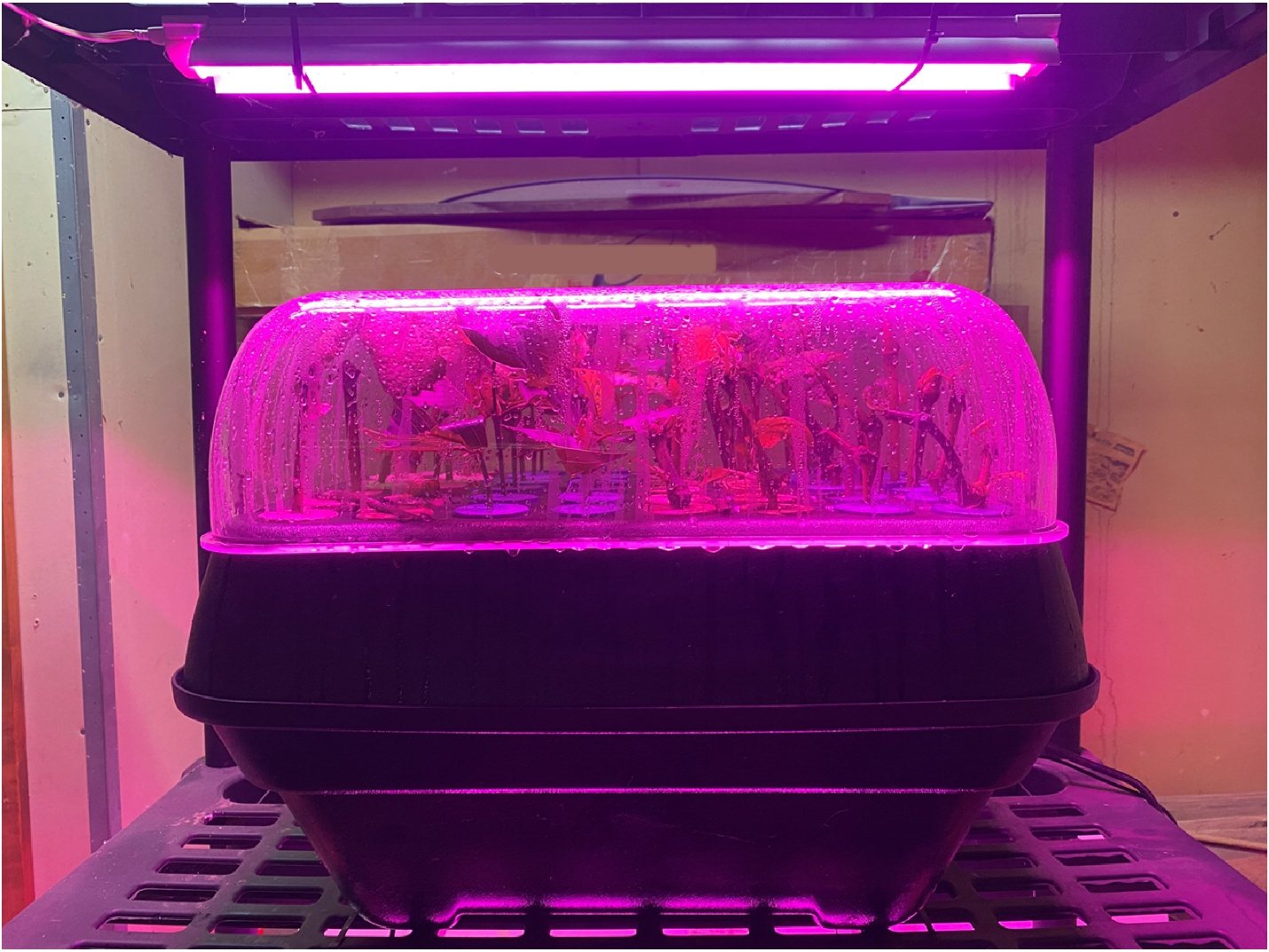
The aeroponic configuration used here comprised a shared reservoir, spray system, collars, circulation fan, and humidity dome (Figure 8). This equipment description identifies the tested protocol; the study did not evaluate cost per transplant, reliability at higher loading, or performance in lower-resource nursery settings.
The peat-cube tray and dome are shown in Figure 9. Individual cubes allowed cuttings to be handled with their surrounding substrate. Labor requirements, space productivity, transplant shock, and vertical-stacking performance were not measured and remain practical questions for subsequent nursery trials.
An apparent association between thinner stems and rooting was noted during nursery handling, but the aggregate records do not support a cutting-level diameter–outcome analysis. This observation is hypothesis-generating only; a future study should link measured diameter to individual outcomes while accounting for source plant, nodal position, and propagation unit.
Using material collected during routine pruning could provide a supplementary source of propagules without requiring whole-plant harvest at the time of collection. The study demonstrates use of that material, not the long-term sustainability of repeated cutting collection. Effects on mother-plant growth, the number of usable cuttings produced per plant over time, and eventual crop yield were not measured.
Commercial and environmental value will depend on outcomes beyond root appearance. Relevant measures include the number of established plants per installed cutting, labor and equipment requirements, water and energy inputs, stock-plant productivity, and post-transplant losses. No enterprise budget or resource-use assessment was conducted, so cost savings, resource efficiency, and effects on industry supply cannot be quantified from this study.
4.1. Limitations
The study involved one site, two named cultivars, and two time-separated runs. It establishes feasibility for the selected material and protocols, not generalizability across the genetic and morphological diversity of kava [11], nursery environments, or seasons. Expert identification, stock provenance, morphology, and chromatographic profiles support the stated stock identity but do not constitute a genetic comparison of cultivars.
The main design constraint is the use of only one peat tray and one aeroponic cloner per run. Cuttings were randomized, but they subsequently shared their unit's environment, solution or substrate management, and potential microbial exposures. There is no independent within-run estimate of propagation-unit variation, and the two temporal repetitions provide limited unit-level replication. Randomization of cuttings does not remove this limitation; increasing the cutting count within the same units would not resolve it.
Assessment times differed between systems, and no concurrent mature woody-cutting treatment or controls isolating rooting gel, nutrients, or inoculant were included. Consequently, performance is attributable only to each combined protocol under the observed conditions. Original root-quality grades did not provide an exhaustive quantitative classification of all possible root architectures; the analysis therefore uses the complete root-presence endpoint rather than graded root quality. Photographs illustrate outcomes but are not quantitative evidence of differences in root architecture.
Follow-up was limited to 30 d after transfer of rooted cuttings into nursery media. Field establishment, longer-term survival, disease transmission, growth, harvestable root yield, and performance of repeatedly pruned mother plants remain unexamined. Economic and environmental assessments are also needed before nursery-scale or production-scale benefits can be claimed.
4.2. Future Work
A subsequent comparative experiment should allocate cuttings from identified mother plants across multiple independent trays and reservoirs, with randomized assignments and documented blocking where appropriate. Both systems should be assessed on the same schedule, using a prespecified definition of root initiation and time to transplant readiness. A concurrent conventional woody-cutting treatment would permit a relevant benchmark. Sample-size planning should be based on the number of independent propagation units, clustering of cuttings, and an agronomically meaningful effect. Complete cutting-level records should link source plant, cultivar, diameter, nodal position, propagation unit, assessment dates, rooting measurements, losses, and post-transplant outcomes. Longer follow-up and measured labor, equipment, energy, and water inputs would then support evaluation of nursery utility and cost per established plant.
5. Conclusions
Selected soft-stem cuttings of Kali-ISA and Kali-Hiwa formed roots in peat-based cubes and an aeroponic cloner in two greenhouse runs. All 83 root-positive cuttings survived 30 d after transplant to nursery pots. The resulting 83 established plants from 172 installed cuttings constitute a proof of concept for obtaining short-term nursery plants from this material under the tested protocols.
The experiment does not establish relative rooting speed, equivalent performance between systems, or an advantage over conventional woody cuttings. Its value is a documented protocol and an auditable descriptive dataset to inform independently replicated, common-time comparisons and longer-term establishment studies.
Supplementary Materials
Supplementary Data S1 provides the aggregate counts for each run × system × cultivar group, including the original root-positive grades, the combined rooted endpoint, and the confirmed 30-d transplant outcomes. Supplementary files are available from the corresponding author on reasonable request.
Author Contributions
Conceptualization, T.B., J.B., and M.M.; methodology, T.B.; investigation, T.B.; resources, T.B.; data curation, T.B.; writing, original draft preparation, T.B.; writing, review and editing, T.B., J.B., and M.M. All authors have read and agreed to the published version of the manuscript.
Funding
Root of Happiness funded the project. The American Kava Association donated the plant material.
Institutional Review Board Statement
Not applicable. This study did not involve humans or animals.
Informed Consent Statement
Not applicable.
Data Availability Statement
All aggregate counts used in the descriptive analysis are included in Tables 1 and 2 and in Supplementary Data S1, which is available from the corresponding author on reasonable request. Representative study photographs are included in Figures 1–9, and additional photographic documentation is retained by the authors. Supplementary Data S1 contains aggregate outcomes rather than individual-cutting measurements.
Use of Generative Artificial Intelligence
Generative artificial intelligence was used in the preparation of this manuscript. ChatGPT 5.2 (OpenAI) was used for grammar and language assistance. Claude Opus 4.6 (Anthropic) was used to assist with tables and data compilation at an earlier preparation stage. Perplexity Computer (Perplexity AI) assisted with manuscript restructuring, literature and consistency checks, and preparation of the descriptive tables. The authors reviewed and edited all output and remain responsible for verification of all data, references, interpretations, and the final manuscript.
Conflicts of Interest
The authors declare the following interests, and readers should weigh the findings in light of them. All three authors are commercially engaged in the kava trade and own and operate kava nurseries and kava businesses in California and Florida that are commercially involved in kava cultivation and propagation, including the cultivars and methods evaluated here. T.B. holds an ownership interest in Root of Happiness Kava, which funded this study; J.B. is affiliated with Nakava LLC and M.M. with Kavafied. T.B. and J.B. are affiliated with the American Kava Association, which donated the plant material. The authors therefore stand to benefit commercially from favorable findings regarding soft-stem propagation of American kava cultivars. The study was designed, conducted, analyzed, and reported independently, and no external commercial funding influenced the experimental design, data collection, data interpretation, or publication of the results.
Prior Dissemination
An earlier account of this study is available as a non-peer-reviewed American Kava Association technical white paper at https://www.americankavaassociation.org/study/aeroponic-cloning-peat. The present manuscript reports the same experimental dataset.
Editorial process
Tyler Blythe is the founder of the American Kava Association, which publishes this journal, and is the journal's Editor-in-Chief; he handled this manuscript. Before acceptance the manuscript underwent Computational Manuscript Review (CMR; see editorial policies) and was then accepted on the editor's decision. No editorial review independent of the authors took place. Corrections, if any, are issued as dated notices linked from this page; the version of record is not amended silently.
References
- Lebot, V. The origin and distribution of Kava. Canberra Anthropology 1995, 18(1–2), 20–33. https://doi.org/10.1080/03149099509508407.
- Singh, Y.N., Ed. Kava: From Ethnology to Pharmacology; Medicinal and Aromatic Plants—Industrial Profiles, Volume 37; CRC Press: Boca Raton, FL, USA, 2004.
- Davis, R.I.; Brown, J.F. Kava (Piper methysticum) in the South Pacific: Its Importance, Methods of Cultivation, Cultivars, Diseases and Pests; ACIAR Technical Reports No. 46; Australian Centre for International Agricultural Research, 1999. https://www.aciar.gov.au/sites/default/files/legacy/node/2134/tr46_pdf_21300.pdf.
- Zhang, Z.; Zhao, L.; Chen, X.; Zheng, X. Successful micropropagation protocol of Piper methysticum. Biologia Plantarum 2008, 52(1), 110–112. https://doi.org/10.1007/s10535-008-0020-9.
- Prasad, R.; Tyagi, A.P.; Taylor, M. Regeneration and establishment of whole plants from kava (Piper methysticum Forster) meristems in tissue culture. The South Pacific Journal of Natural and Applied Sciences 2008, 26(1), 39–44. https://doi.org/10.1071/SP08006.
- Vanuatu Department of Agriculture and Rural Development. Vanuatu National Kava Strategy 2016–2025; Ministry of Agriculture, Livestock, Forestry, Fisheries and Biosecurity, Vanuatu. https://pafpnet.spc.int/attachments/article/562/VANUATU_Kava%20Strategy.pdf.
- Weingarten, M.; Mattson, N.; Grab, H. Evaluating propagation techniques for Cannabis sativa L. cultivation: A comparative analysis of soilless methods and aeroponic parameters. Plants 2024, 13(9), 1256. https://doi.org/10.3390/plants13091256.
- Botanicare. Hydroguard: Product Information and Guaranteed Analysis. https://www.botanicare.com/products/hydroguard/ (accessed 24 September 2026).
- Zhang, M.; Montanez, C.; Pearson, B.J.; Li, Y.; Chen, J. Aeroponics enables consistent cutting propagation of kratom (Mitragyna speciosa): Impacts of photoperiod, cultivar, and rooting hormone. Frontiers in Plant Science 2025, 16, 1650327. https://doi.org/10.3389/fpls.2025.1650327.
- Yafuso, E.J.; Fisher, P.R.; Bohorquez, A.C.; Altland, J.E. Water and air relations in propagation substrates. HortScience 2019, 54, 2024–2030. https://doi.org/10.21273/HORTSCI14145-19.
- Lebot, V.; McKenna, D.J.; Johnston, E.; Zheng, Q.Y.; McKern, D. Morphological, phytochemical, and genetic variation in Hawaiian cultivars of ‘Awa (kava, Piper methysticum, Piperaceae). Economic Botany 1999, 53(4), 407–418. https://doi.org/10.1007/BF02866720.
How to cite
Blythe, T.; Bowman, J.; Masifilo, M. Soft-stem propagation of Piper methysticum in peat-based cubes and an aeroponic cloner: a greenhouse proof-of-concept study. J. Am. Kava 2026, 1, 001. https://journalofamericankava.org/articles/aeroponic-cloning-peat
Please cite this version of record. The earlier preprint (10.5281/zenodo.23741149) is superseded by it.